
Due to their very high flexibility and unique specifications, GHz laser pulse synthesizers find applications across various domains, from mature industries (material processing) and growing markets (quantum technologies) to emerging sciences (spintronics).
Please inquire about your specific use case ; our modular platform Neon-Flex can be tailored to meet every demanding request. We offer customized systems with a selection of features and options.
Material processing
Description
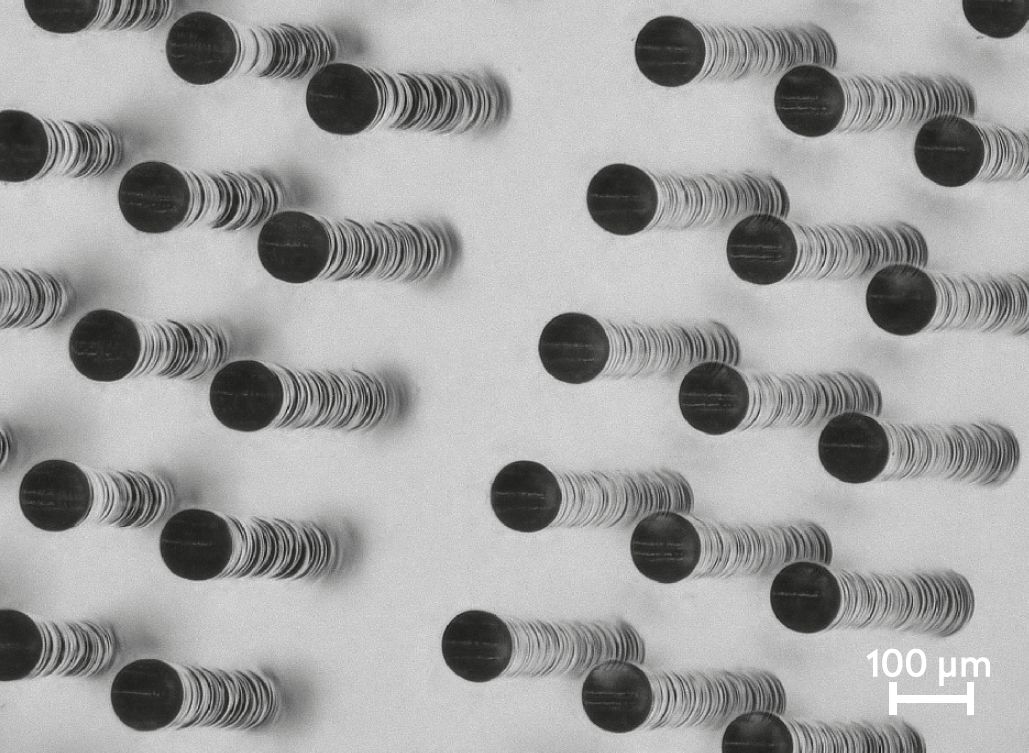
Burst laser emission leads to a higher ablation rate and better quality in materials where a phase change occurs. By splitting a single high-energy pulse into a rapid train of sub-pulses, burst mode allows the laser to interact more efficiently with the material as it heats and transforms, removing material faster while producing cleaner, higher-quality results than conventional single-pulse processing.
In particular, the burst regime is well suited to via drilling in glass (TGV) and to microelectronic manufacturing. This makes it a key enabling technology for glass interposers and advanced electronic packaging, where manufacturers need to drill small, deep holes through glass substrates without cracking or damaging the material. Burst-mode processing achieves the high throughput needed for volume production while delivering the precision and hole quality required for reliable microelectronic components.
Neon-Burst is our dedicated system for material processing. It features a highly tunable repetition rate of up to 20 GHz, a burst rate of 100 kHz, and variable burst duration with temporal shaping.
Benefit of our technology
- Access to a wide range of repetition rates, from 1 to 20 GHz, allowing optimized processes
- Burst mode for newest laser material processing
- Pulse/burst effortless synchronization
Specifications example
Check our dedicated system Neon-Burst
Quantum technologies
Description
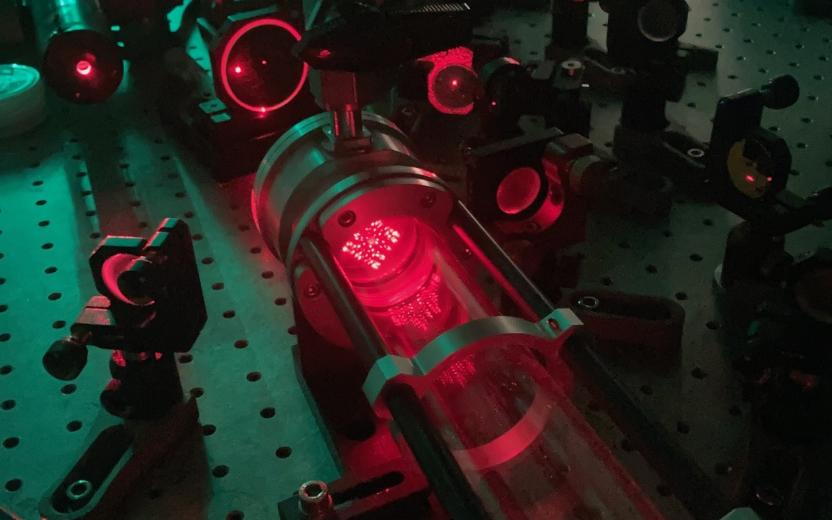
Photonic qubits can be generated via either spontaneous parametric down-conversion (SPDC) or spontaneous four-wave mixing (SFWM). Both are well-established nonlinear optical processes in which a nonlinear medium converts pump photons into pairs of correlated photons, and both are widely used across the quantum photonics industry to produce the entangled and heralded single-photon states needed for quantum computing, communication, and sensing applications.
In both cases, a pulsed laser is required.
The pump laser drives the nonlinear process and its pulsed nature is what allows photon pairs to be generated with the precise timing needed for downstream applications such as heralding, synchronization between multiple sources, and interference-based operations in quantum photonic circuits. This makes the choice and performance of the pump laser a critical design factor, directly influencing the generation rate, purity, and overall efficiency of the resulting photonic qubit source
Our GHz laser pulse synthesizers increase the qubit generation rate through synchronized GHz pulse emission. In addition, the central wavelength can be tuned to optimize the pumping process.

Benefit of our technology
- Tunable central wavelength for more efficient pumping
- Synchronized pulse emission on the system's clock
- High repetition rate (1-3 GHz) for higher qubits generation rate
Specifications examples
Wavelength: 1520-1580 nm (tunable)
Repetition rate: 3 GHz
Pulse duration: 5 ps
Pulse energy: 150 pJ
Synchronized on 10 MHz clock
Wavelength: 920-935 nm (tunable)
Repetition rate: 1 or 3 GHz (selectable)
Pulse duration: 3-10 ps (tunable)
Pulse energy: 150 pJ
Synchronized on 10 MHz clock
Dual-comb spectroscopy
Description
Dual-comb spectroscopy uses two frequency combs with slightly different repetition rates to probe a sample, generating a radio-frequency comb via heterodyne detection that maps the optical spectrum down to easily measurable frequencies. This down-conversion means the rich optical information carried by the combs can be captured with standard, low-cost electronics rather than complex optical scanning hardware.
This enables fast, high-resolution, broadband spectroscopy giving the technique a strong edge over traditional spectroscopic methods in terms of speed, robustness, and reliability. This combination of speed and precision has made dual-comb spectroscopy increasingly attractive for real-world applications such as trace gas detection, environmental and emissions monitoring, industrial process control, and breath analysis for medical diagnostics: use cases where accurate, multi-species measurements need to be delivered quickly and reliably.
Achieving coherence between two laser pulse synthesizers is straightforward, as both systems easily share the same optical and radio-frequency references.
Benefit of our technology
- Simple and cost-effective layout to generate mutually coherent frequency combs
- Easy adjustment of spectral overlap and frequency difference
- Robust, 100% fiber-coupled, without moving part
Specifications example
Two systems with common optical/RF references:
Wavelength: 1030 nm
Repetition rate: 1-20 GHz (tunable)
Pulse duration: 1 ps
Power: 10 W
Photo injection
Description
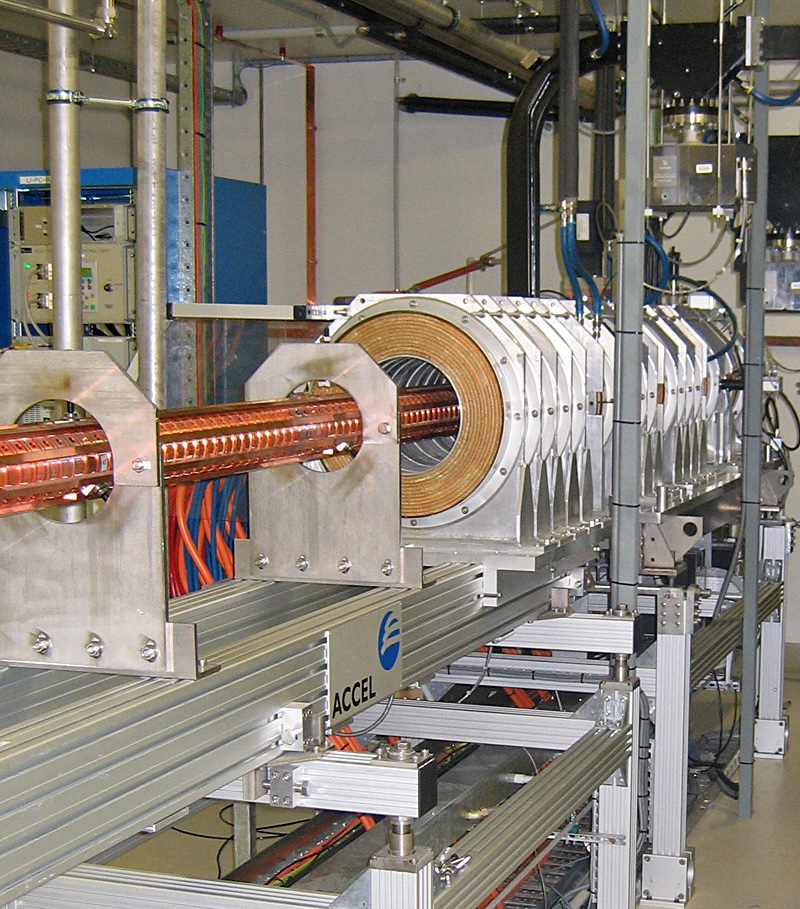
Linear particle accelerators with photo-injected cathodes use ultrafast laser pulses to generate electron bunches via the photoelectric effect, allowing precise control over bunch timing, charge, and shape. This laser-driven approach gives accelerator designers a level of control over the electron source that is difficult to achieve with thermionic or DC guns, directly translating into better beam quality and more reliable downstream performance.
To increase the average brightness of the accelerator, one can increase the laser's pulse repetition rate, synchronized to the RF frequency of the accelerating cavity, up to that RF frequency itself. As the field moves toward next-generation, superconducting continuous-wave accelerators capable of processing electron bunches at MHz rates and beyond, the laser driving the photocathode becomes an increasingly critical bottleneck: it must deliver stable, well-synchronized pulses at ever-higher repetition rates without compromising the timing precision or pulse quality the application demands.
This use-case is particularly adapted to our technology which can generate synchronized emission at very high repetition rates as a laser seed, positioning it as a natural fit for the next generation of high-average-power free-electron lasers, energy-recovery linacs, and related light-source facilities that require both high brightness and high repetition rate simultaneously.
Benefit of our technology
- Very high repetition rate (12 GHz for X-Band)
- Synchronization on a GHz-range high-frequency carrier
- Spectral profile and dispersion compensation for CPA amplifiers
Specifications example
Wavelength: 1047 nm (compatible with Nd:YLF)
Repetition rate: 12 GHz
Pulse duration: 5 ps
Spectral profiling and dispersion compensation
Synchronized on 1.5 GHz carrier frequency
Astrocombs
Description
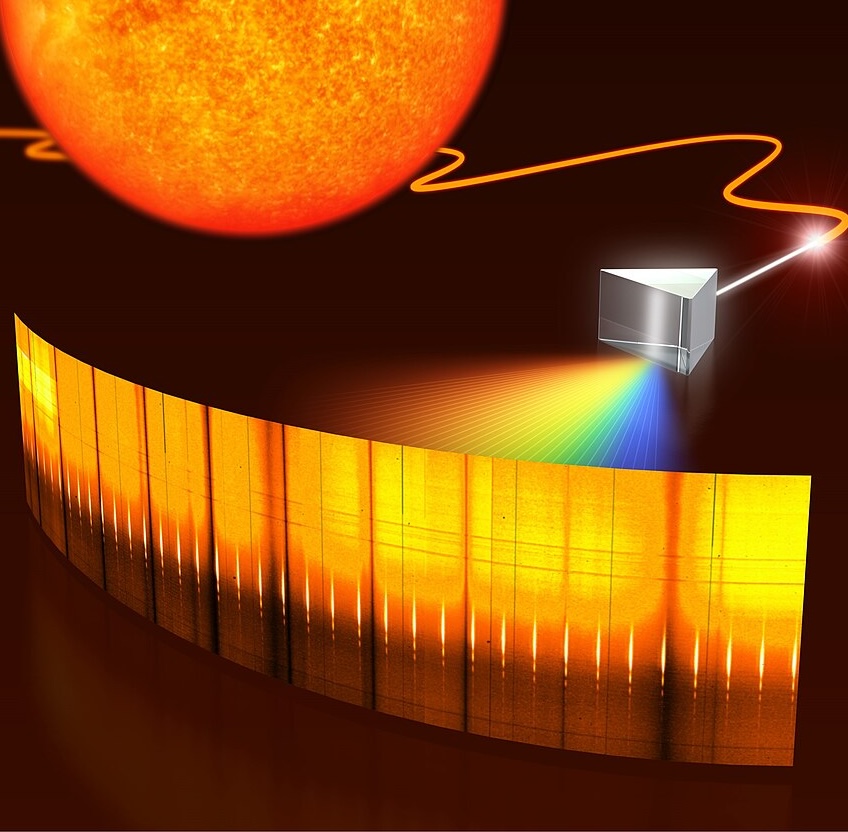
Astrocombs are optical frequency combs specifically engineered to calibrate astronomical spectrographs, providing an ultra-precise set of reference lines spaced in the GHz range, wide enough to be individually resolved by the spectrograph. It enables the detection of tiny Doppler shifts in starlight, critical for exoplanet searches via the radial velocity method.
A key practical challenge is that standard mode-locked laser combs have repetition rates around 1 GHz or below, which is far too fine to be resolved by astronomical spectrographs. Conventional astrocombs work around this by adding filter cavities to thin out the comb lines to a workable spacing, but these add complexity, insertion loss, and calibration overhead to the system.
Our technology can directly generate evenly spaced, GHz-range reference lines without requiring spectral filters, eliminating this extra layer of hardware and simplifying the path to a resolvable, spectrograph-ready calibration source.
Benefit of our technology
- Directly generates the very-high repetition rate needed for the application, without any spectral filtering step
- Effortless synchronization
- High-power emission at 1030 or 1550 nm for non-linear operations
Specifications example
Wavelength: 1030 nm
Repetition rate: 16 GHz
Pulse duration: 1 ps
Burst repetition rate: 1 MHz
Burst duration: 50-200 pulses
Average power: 10 W
Side-channel attacks
Description
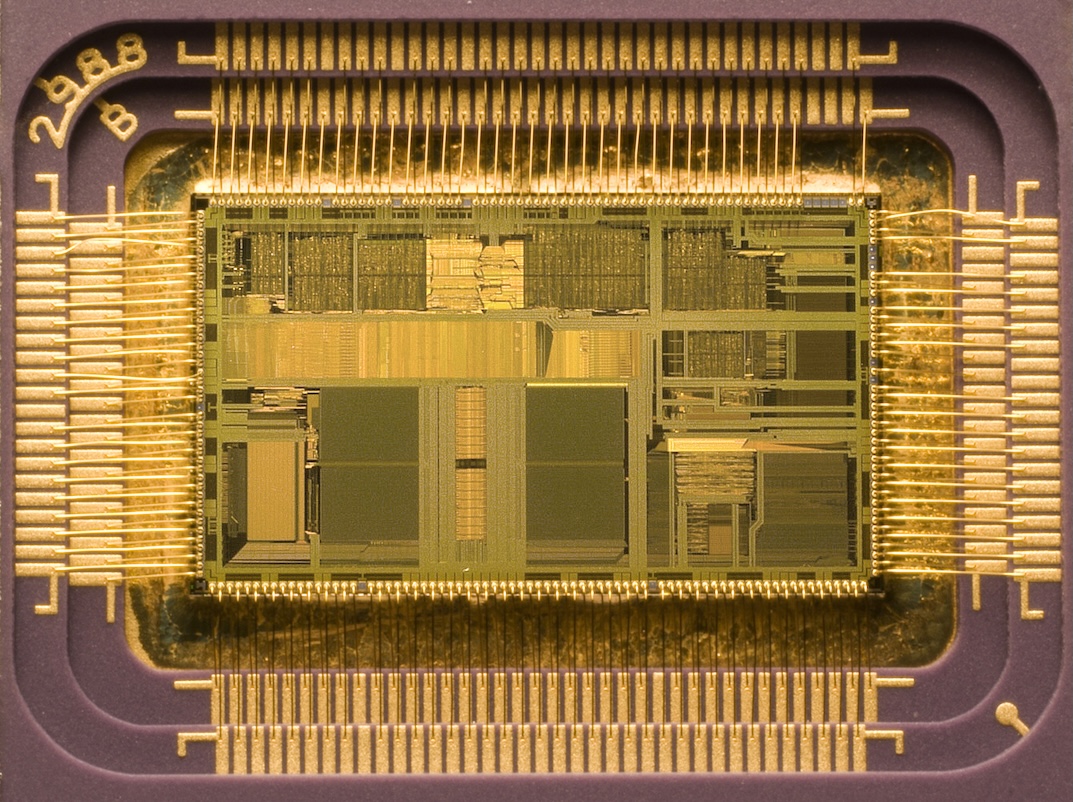
Laser-assisted side-channel attacks exploit techniques from IC failure analysis, such as laser probing, to enable contactless probing of on-chip data, extracting secret keys and other sensitive information from secure integrated circuits despite conventional countermeasures. Originally developed as legitimate debugging tools, these techniques take advantage of silicon's transparency to infrared light, allowing chip internals to be observed from the backside without any physical or electrical contact. Optical probing is now considered one of the most credible physical threats to secure hardware.
Our technology enables both pulse-on-demand operation with exceptionally low temporal jitter (< 10 ps) for single-shot probing/injection, and continuous emission with a tunable repetition rate synchronized to the chip's clock frequency, all within a single flexible system.
Benefit of our technology
- Low temporal jitter for single-pulse operation
- Synchronized, tunable repetition rate for repetitive attacks on clock events
Specifications example
Wavelength: 1030 nm
Pulse duration: 1-5 ps (tunable)
Pulse energy: up to 40 nJ
Repetition rate: 100 MHz – 4 GHz (continuously tunable)
Synchronized repetition rate
Single-shot mode
Lidar & Space tracking
Description
In lidar and space tracking, the laser's pulse repetition rate fundamentally limits the achievable update rate and range resolution, with low rates increasing the risk of range ambiguity for fast or distant targets.
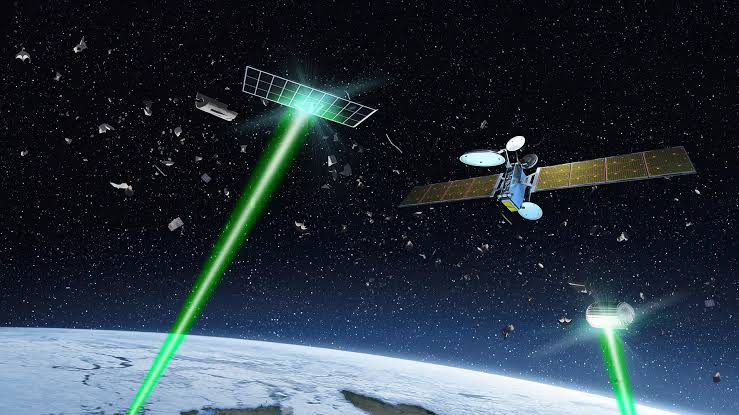
This becomes especially critical for tracking high-velocity objects like satellites or debris, where higher repetition rates are needed for accurate trajectory reconstruction. The field has moved to kHz-range repetition rate lasers, enabling finer temporal resolution for fast-moving targets and even the ability to resolve individual features, such as distinct retroreflectors or an object's spin, directly supporting safer space situational awareness and collision avoidance.
Our technology enables burst emission with a varying pulse repetition rate, allowing each burst to be individually distinguished even at the MHz-range. With a dedicated radio-frequency setup, each burst is discriminated through demodulation, while time of flight is measured via phase mixing.
Benefit of our technology
- Ability to change the pulse repetition rate from burst to burst
- Burst discrimination allows higher tracking/ranging bandwidth
Specifications example
Wavelength: 1550 nm
Burst repetition rate: 0.1 – 5 MHz (tunable)
Pulse repetition rate: 16 GHz
Pulse repetition rate modulation for burst discrimination
Average power: 5 W
Spintronics
Description
Spin precession in materials is typically measured using time-resolved techniques, where a pump pulse excites the spin system and a delayed probe pulse detects the resulting oscillation in magnetization through polarization rotation as a function of time. This conventional approach reconstructs the full precession dynamics point by point, by scanning the delay between pump and probe pulses, which offers excellent temporal resolution but generally requires a dedicated delay line and can be time-consuming to fully map out.
Our technology enables an alternative spectral-domain approach, in which the incident laser acts as both pump and probe under resonant excitation. When the pulse repetition rate is tuned to match a multiple of the material's precession frequency, successive pulses reinforce one another, producing a resonance that directly reveals the spin dynamics in the frequency domain rather than one delay step at a time.
Benefit of our technology
- Continuously tunable repetition rate from 1 to 20 GHz
- Burst mode to increase energy per pulse
Specifications example
Wavelength: 1030 nm
Pulse repetition rate: 1-20 GHz (tunable)
Pulse duration: 1 ps
Burst repetition rate: 0.1 – 1 MHz (tunable)
Average power: up to 2 W
Optical links
Description
Synchronizing apparatus across very large scientific installations cannot be achieved with coaxial cables, as they suffer from significant group velocity variation from temperature fluctuations and mechanical perturbations along kilometer-scale cable runs. It introduces timing errors that exceed the tight tolerances required by demanding science. The state-of-the-art solution relies on phase noise detection and compensation to realize stabilized links, continuously monitoring and correcting the fiber's delay to achieve femtosecond-level stability even over multi-kilometer distances.
One approach is to generate optical pulses with very low jitter (< 10 fs, 1 Hz – 10 MHz) relative to the reference carrier and propagate them through non-stabilized optical fiber. Because the pulses are tightly synthesized from the reference, the residual timing errors picked up while traveling through an uncompensated fiber link can remain within acceptable limits, avoiding the cost and complexity of a fully actively stabilized link while still meeting the synchronization needs of many facility subsystems.
Our technology directly synthesizes optical pulses from a radio-frequency carrier, enabling these exceptionally low jitter levels, offering a simpler and more compact route to distributing precise timing across large-scale scientific installations

Benefit of our technology
- Directly convert a RF carrier frequency to optical pulses
- Very low relative timing jitter
Specifications example
Wavelength: 1540 nm
Pulse repetition rate: 12 GHz
Pulse duration: 1 ps
Synchronized on a 12 GHz reference carrier
Average power: 50 mW per output
Non-destructive testing
Description
Picosecond ultrasonics technique uses a pump pulse to launch a coherent acoustic wave in the sample, while the delayed probe detects its propagation and reflections through subtle changes in optical reflectivity. Scanning the pump-probe delay gives non-contact access to acoustic phonon dynamics, from which properties like film thickness, sound velocity, and elastic constants can be extracted at the nanoscale.
GHz laser pulse synthesizers can resonantly excite, detect and measure the material parameters, as they can adjust their pulse repetition rate over a very broad GHz range. Rather than relying on a mechanical delay line, tuning the repetition rate directly matches the excitation to the sample's acoustic resonances, offering a faster, purely optical route to the same material information without any moving parts.

Benefit of our technology
- Continuously tunable repetition rate from 1 to 20 GHz
- Burst mode to increase energy per pulse
Specifications example
Wavelength: 1030 nm
Pulse repetition rate: 1-20 GHz (tunable)
Pulse duration: 1 ps
Burst repetition rate: 0.1 – 1 MHz (tunable)
Average power: up to 2 W